
Family is the cornerstone of care for older adults who have lost the capacity for independent living. In many developed countries, the vital caring role of families and their need for support is often overlooked. In developing countries, the reliability and availability of the family care is often overestimated. Family caregivers are often cast into the role of caregiver unexpectedly and are largely unpaid.
Alzheimer’s Disease International
Healthcare providers working with family members and caregivers caring for a person living with dementia must first understand their needs. They must learn about dementia and learn to communicate with sometimes-resistant family members and often-untrained paid caregivers. Differences in education, training, and cultural backgrounds can compound these difficulties.
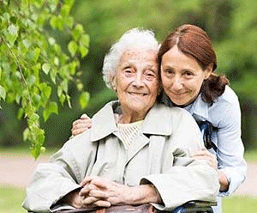
A family caregiver and her mother. Source: CDC, public domain.
Family involvement can include companionship, assisting with meals, personal care or mobility, as well as initiating communication with healthcare professionals. Family members frequently serve as advocates, ensuring a client’s preferences and values are recognized and respected in daily care, planning, and decision-making. Families play a vital role in monitoring the quality of care, sharing personal knowledge about a client’s history and routines, and facilitating continuity between home and life in the care facility (Prins et al., 2026).
Involvement family increases the well-being of the person living with dementia by making them feel they are receiving good care and are not being abandoned in a care facility. It also increases a family caregiver’s satisfaction with dementia care (Tasseron-Dries et al., 2023).
6.1 Recognizing Issues and Concerns of Family Caregivers
Taking care of my own health took a nosedive as my mom’s dementia got worse. Near the end of her life, I was drained emotionally and financially. Hobbies, free time, and vacations were a distant memory, and family relationships were damaged beyond repair.
Family Caregiver, Palm Beach, Florida
Family caregivers face unique challenges that differ from those of professional caregivers. Long held habits, beliefs, roles, and expectations can hurt or help familial relationships. The role of caregiver may fall on a spouse or adult children that have their own health concerns. Caregivers may live a long distance away, work fulltime, or be financially strained.
Approximately 85% of Americans living with dementia reside with family, friends, or in assisted living facilities, while 15% live in nursing facilities. In the last year of life, family caregivers of a person living with dementia are three times more likely to experience caregiver burden compared to caregivers of people dying from other diseases (Bigger et al., 2024).
Moving a family member to a skilled nursing facility can be extremely stressful. The person living with dementia and their caregivers are at higher risk for poor outcomes related to these care transitions* than people without dementia. Despite the need for flexible, tailored, and equitable services, care systems are often fragmented and difficult to navigate (Bigger et al., 2024).
*Care transitions: movement between healthcare services or locations of care.
6.1.1 Issues and Concerns in the Early Stage
In the early stage of dementia, family members are confronted with many issues, worries, and concerns as they adjust their own behavior and manage their own frustrations while learning about the effects of dementia. They are often unaware of dementia-care services and may find their primary care physician to be of little help.
Family caregivers may struggle with accepting a dementia diagnosis and may be troubled by changes they are seeing in their family member. They may have concerns about the future and how they will provide care as a family member’s dementia progresses.
Caregivers report a lack of support, insufficient dementia knowledge, and barriers obtaining and sharing information, resulting in isolation in caregiving responsibilities. They are often isolated and experience frustration, anxiety, depression, burnout, and prolonged stress (Scerbe et al., 2023).
Spouses who care for a person living with dementia may not be in good health themselves and may worry about not being able to provide good care, especially as the dementia progresses. Adult children may worry about having to take over the care of a parent and assume a new role in the family.
Early, specialized training is recommended—especially when care duties are lighter than they will be in later stages. This is an essential but often neglected part of dementia care. Training prepares family caregivers for what lies ahead and allows them to more easily partner with healthcare providers to provide competent and compassionate care.
6.1.2 Issues and Concerns in the Middle Stages
A diagnosis of dementia usually doesn’t occur until the middle stage. This means family caregivers are playing catch-up, just beginning to learn about communication techniques, assistive equipment, and dementia-care services. At this stage, the person living with the effects of dementia as well as family caregivers have already experienced significant changes in their lives.
During the middle stage, caregivers begin to invest more time, energy, and money. The increased time needed to care for a previously independent person can increase caregiver anxiety, depression, stress, and burnout. The responsibility of caregiving often falls mostly on one person, which can lead to anger and frustration with other family members.
Behavioral and psychological problems can arise, requiring decisions about interventions and, perhaps, medications. Family caregivers often cut back on employment as caregiving demands increase.
Listening carefully to a caregiver’s concerns, encouraging participation in decision-making, and recommending a support group (even online) can help caregivers feel competent and valued.
6.1.3 Issues and Concerns in the Late Stages
I’m exhausted. I can’t sleep because I have to watch out for my wife. She wanders around the house, takes out all kinds of stuff from the kitchen. I never know what she’s going to do.
Family Caregiver, Miami, FL
In the late stage of dementia, continuing to live at home or in assisted living may no longer be an option. One of the most difficult issues—usually in the middle to late stages of dementia—is the decision to transfer a family member to a facility with a higher level of care. Reasons cited by caregivers for placement are:
- need for skilled care and assistance
- family caregivers’ health
- patient’s dementia-related behaviors
Healthcare providers can be a valuable source of support, providing information about respite care and long-term care options. Counseling and support groups allow caregivers to discuss any guilt they may be feeling and learn from other caregivers about how to navigate the medical system.
For family caregivers, relinquishing full-time care can cause feelings of loss, sadness, resignation, and depression. Paradoxically, placement of a loved one in a care facility may not lessen the stress that a caregiver experiences.
6.1.4 End of Life Issues and Concerns
The demands of caregiving intensify as the person living with dementia approaches the end of life. In the year before the person’s death, more than half of caregivers feel they were “on duty” 24 hours a day, and many report caregiving during this time is extremely stressful. Many family caregivers report they experienced relief when the person with dementia died (Alz.org, 2025).
Caregiver well‐being is influenced by the availability of family support, family functioning, conflict, and feelings of isolation, all of which are linked to increased depression, distress, and burden. The emotional toll of caregiving is often harder for female caregivers, who often take on greater responsibilities and spend more time caregiving than their male counterparts, especially during end-of-life care (Iacob et al., 2025).
Interventions, such as educational programs, can reduce caregiver burden. Family dynamics also play a crucial role in caregiver stress. Supportive families can reduce caregiver burden, while dysfunctional family dynamics increase caregiver stress. Encouraging family members to participate in therapy, support groups, and respite programs, can reduce caregiver distress. Living with the care recipient can enhance caregiving but can also increase stress due to the constant demands of care (Iacob et al., 2025).
6.2 Strategies for Encouraging Family Involvement
Family involvement is a key component of high-quality care in long-term care facilities and is an important aspect of person-centered care. It contributes to continuity, and to a client’s emotional well-being, quality of life, and overall health (Prins et al., 2026).
When families are included as active partners and feel appreciated by the staff, their involvement often increases. Expressing appreciation and empathy for family members improves understanding and collaboration, strengthens partnerships and improves communication, trust, and overall care quality (Prins et al., 2026).
Involving family members means:
- encouraging them to choose and participate in activities
- helping them arrange transportation if needed for regular visits
- encouraging them to learn about and understand the challenges associated with dementia
- inviting them to join multidisciplinary team meetings
- emphasizing their role as a partner in care for the resident
6.2.1 Dementia Care Programs
Dementia care programs are one method for encouraging family involvement. They are designed to meet the individual needs of the person living with dementia. Their quality and success depend on the environment, philosophy of care, available services, and staff experience and training.
A well-designed dementia care program encourages the family’s involvement by:
- keeping family members informed about changes in their loved one’s condition
- documenting resident activities to share with the family
- encouraging residents to call and write to family members and friends
- using technology to keep families in touch with one another
In Florida, 95% of certified nursing facilities have a resident group, a group of residents who meet regularly to discuss and offer suggestions about policies and procedures affecting residents' care, treatment, and quality of life. The purpose of these groups is to support family caregivers, plan resident and family activities, participate in educational activities, or for any other purposes (KFF, 2024).
6.2.2 Caregiver Training and Support
For family members and informal caregivers, training, education, and support are critical. Training introduces caregivers to resources and equipment that can improve health and safety and reduce caregiver strain.
Caregiver training and support programs provide:
- help with challenging behaviors, especially at the end of life
- help for caregivers dealing with swallowing issues and loss of appetite
- education about the dying process
- information about changing personal care needs
In addition to in-person training and support, caregivers can benefit from personalized, user-friendly online programs. Well-designed programs connect caregivers with a social network, allowing them to share ideas and practical concerns.
6.2.3 Barriers to Family Involvement
The system of unpaid family care is under intense pressure due to declining fertility rates and fewer young people willing to care for older adults. Many family members do not live near their older adult relatives.
Most family caregivers are women, and many are caring for children, working, and managing a household at the same time they are caring for a family member. In this situation, many caregivers cut back on work, which affects their finances. Hiring a caregiver is costly and may not significantly reduce the strain on family members.
Family caregivers often take a step back when their relative is admitted to a care facility despite their willingness to remain actively involved. Several factors contribute to this decline in care involvement (Tasseron-Dries et al., 2023):
- Caregivers are not seen as partners in care.
- Regular contact between family and staff is lacking.
- Family caregivers do not feel welcome.
6.3 Grief and Loss
I’m ashamed to say that before I began taking care of my mother, I had very little understanding of the grief experienced by family members caring for someone living with dementia. I only offered platitudes such as “Make sure you walk with your wife every day”—this when the husband was slumped at the kitchen table, clearly overwhelmed and severely depressed. I just didn’t see it. Now I do.
Home Health Physical Therapist, Tampa, Florida
A diagnosis of dementia can cause a great deal of grief for the person receiving the diagnosis, as well as their family and friends. Concern is related to uncertainty about the progression of the disease and anticipated loss of independence. For family and spousal caregivers, grief is associated with changes in social roles and loss of companionship and friendship.
The stage, age of onset, degree of insight, communication abilities, and type of dementia impact feelings of grief. A person’s history, personality, coping style, gender, relationships, personal resources, and support networks are also important to consider. Grief is a response to any loss that is significant to an individual and is a process that unfolds in a non-linear manner (Waddington et al., 2023).
6.3.1 Dimensions of Grief
Grief can be associated with any form of loss, including loss of employment, changes in relationships, significant life changes, loss of health, and loss of the future that was hoped for and imagined (Waddington et al., 2023).
Key dimensions of grief include (Waddington et al., 2023):
- Grieving for the person I used to be.
- Concern for how others see me.
- Grieving the person I will become.
- Grieving for those who have died.
- Failing to know what helps me with my grief.
One of the most common grief frameworks is the five stages of grieving traced to Elizabeth Kübler-Ross’s (1969) book, On Death and Dying. The fundamental premise is that a dying individual goes through five stages: denial, anger, bargaining, depression, and acceptance. Kübler-Ross later included anticipatory grief related to the client’s family (Avis et al., 2021).
6.3.2 Anticipatory Grief
Anticipatory grief is the experience of grief before an actual loss has occurred. It is common among clients living with Alzheimer’s disease and dementia, as well as their caregivers. Anticipatory grief can be an unrecognized but significant psychological burden (Wang et al., 2026).
About 30% to 50% of clients living with a chronic illness experience anticipatory grief due fear and uncertainty about the impending loss. This can significantly diminish a client’s quality of life. Anticipatory grief is associated with severe depression and anxiety. These responses to anticipatory grief can impact health outcomes, reduce survival rates, and increase the risk of adverse events (Wang et al., 2026).
Many caregivers also experience anticipatory grief due to the physical and mental burden associated with caregiving and uncertainty about the progress of the disease. This is common in informal caregivers, including spouses and family members. As caregiver stress increases, anticipatory grief can also increase, causing anxiety and depression in informal caregivers (Wang et al., 2026).
6.3.3 Physical and Psychological Symptoms of Grief
Grief can cause physical symptoms such as shortness of breath, headaches, fatigue, a feeling of heaviness, and a loss of physical strength and abilities. It can also cause psychological symptoms such as clinical depression, hypochondria, anxiety, insomnia, and the inability to get pleasure from normal daily activities.
The onset of dementia can affect other aspects of a person’s life as well, including loss of income and savings, and loss of health insurance. There may be changes in housing and personal possessions, loss of pets, and loss of self-sufficiency, privacy, and self-esteem.
6.3.4 Grief in Caregivers
Caregivers of persons living with dementia experience intense feelings of grief and loss prior to the physical death of the person they are caring for. The impact of these losses can build as the disease progresses. Cognitive decline, memory loss, changes in personality, and lost and forgotten family history increase caregiver grief. A caregiver’s grieving can lead to feelings of ambiguity, disenfranchised grief,* loss of companionship, as well as anger and guilt (Rupp et al., 2023).
*Disenfranchised grief: a type of grief that occurs when a person's loss is not recognized, validated, or openly acknowledged by society.
Moving from home can be the cause of grief for both the person living with dementia and their family members. It can cause a loss of connection with friends, loss of pets, and loss of control.
Worries about potential future losses can be a cause of grief. Loss of independence, loss of a driver’s license, loss of communication and navigation skills, concerns about changes in personality and behavior, and fear of dying contribute to grief. There can be a general sense of the loss of the life a person had hoped for and imagined that they were no longer able to live (Waddington et al., 2023).
6.3.5 Loss of Friends and Family Members
About 2 years before my mom died, I received a phone call from a cousin saying that my mom’s sister had died. I hung up the phone and, not knowing how my mom would react, gently told her that her sister had died. There was a flash of recognition and grief on her face that quickly faded, and I think she almost immediately forgot what I told her. It was harder for me seeing her inability to process her sister’s death than it seemed to be for her.
Family Caregiver, Lauderdale Lakes, FL
Bereavement-related grief has been studied in people living with dementia, relating to the death of family members, friends, and other members of a care facility. Opinions differ on whether to inform people living with dementia of a death. Some caregivers feel that everyone had a right to be informed; others feel that telling people living with dementia can lead to unnecessary distress (Waddington et al., 2023).
Concerns about informing a person living with dementia multiple times about a death and its ongoing impact is sometimes referred to as “re-bereavement” grief. There are different views on how and who is best placed to inform, and how to best support the person living with dementia following the death of someone with whom they may have been close (Waddington et al., 2023).