
A therapeutic environment is an important factor in every person’s quality of life. A thoughtfully designed environment supports the well-being of a person living with dementia and can be an effective non-pharmacological factor in reducing challenging behaviors (Siegelaar et al., 2025). It is a key component of person-centered care.
A therapeutic environment is especially important for people living with dementia because, as their cognitive skills decline, they become more dependent on the physical space. Brain changes make it harder for a person to create and retain a mental image of their physical space. A well-designed therapeutic environment can compensate for these losses (Buuren et al., 2025).
A therapeutic environment should help a person easily and safely find their way around. People living with dementia use objects and signs to find their way. Although some objects, such as a microwave or care equipment are not meant for the wayfinding,* people still use these objects to orient themselves to the environment (Buuren et al., 2025).
*Wayfinding: a person’s ability to navigate spaces using signs, maps, and environmental cues.
A therapeutic environment provides safe and private personal spaces as well as communal areas that encourage activities and socialization. Ample daylight, an open design for nursing stations, and placing artwork throughout the facility supports therapeutic design (Rodríguez-Labajos et al., 2024).
Certain health benefits are associated with dementia-friendly design including:
- decreased agitation
- improved well-being and affect
- improved attention
- improved quality of sleep
- decreased use of medication (Lygum et al., 2025)
7.1 Physical Environment
A supportive physical environment means treatment and care are offered in a manner that is tailored for people living with dementia (Lygum et al., 2025). A well-designed physical environment supports engagement in activities, can decrease psychotropic drug use, and improve independence (Siegelaar et al., 2025).
Interior environments that are “homelike” are associated with reduced behavioral disturbances and increase social interaction. Family-style dining in small groups can improve food and fluid intake. Good light levels during the day can reduce functional decline, while improving the circadian rhythm and quality of sleep (Siegelaar et al., 2025).
Indoor features such as bright-light therapy (1,000–2,500 Lux) have been shown to positively influence clients’ agitation and disruptive behaviors and improve daytime wakefulness. In general, moderate or low levels of sensory stimulation prevent overstimulation, reducing agitation and restraint use (Siegelaar et al., 2025).
Dementia-friendly indoor design may include:
- private space in a person’s room with a private bathroom
- public spaces that are easy to access
- rooms personalized with furniture, memorabilia, and personal possessions
- absence of smelly odors
- sunlight, ventilation, and elimination of dark nooks and crannies
- areas that cue specific behaviors (kitchen, art and music area, rummaging room, library, coffee shop, quiet areas, living room, family visiting area)
Dementia-friendly outdoor design should allow a person to connect with nature. An outdoor environment should (Oher et al., 2024):
- be safe and secure
- be easily accessed
- provide an identifiable entrance with a fenced space
- be familiar
- have landmarks for orientation and wayfinding
- provide options for different kinds of weather
- be calm, peaceful, and undemanding
Spending time in a garden or outdoor area can reduce agitation, aggression, drug use, and falls. Green care farms, which includes animals and gardens, provides opportunities for attractive outdoor activities and are associated with improved psychological well-being. Outdoor and garden areas and participation in outdoor activities can also reduce drug-use (Siegelaar et al., 2025).
7.2 How an Organization’s Philosophy of Care Affects the Environment
An organization’s philosophy of care is a framework that identifies its goals and values. The family, and the person receiving services, has the right to know—and should feel free to question—a center’s philosophy of care. Key questions can include (California Advocates for Nursing Home Reform, 2024):
- Is the center’s philosophy consistent with your beliefs?
- Does the center provide services to persons at all stages of dementia?
- What conditions or behaviors determine whether a center will admit or retain someone living with dementia?
- Is dementia care provided in a separate unit or as an integrated part of center’s services?
- Is the center’s philosophy and practice of handling "difficult behaviors" compatible with your views?
- What is the center’s philosophy in using physical restraints to deal with certain behaviors?
- Does the center recommend the use of psychoactive drugs to treat challenging behaviors?
Person-centered care is the philosophy of care encouraged for individuals living with ADRD. An organization’s philosophy should support a resident’s rights. People living with dementia have the right to have their own clothes and other personal items. They must have unrestricted private communication, be able to send and receive unopened correspondence, and have access to a telephone. If both spouses are residents, they have the right to share a room.
Residents have the right to visit with any person of their choice, manage their own financial affairs (if able), exercise their civil and religious liberties, and access appropriate healthcare. The living environment must be safe and clean, and residents must be free from chemical and physical restraints and free from abuse and neglect.
Dementia Friends is a global movement that is changing the way people think, act, and talk about dementia. Dementia Friends USA helps everyone in a community understand what dementia is and how it affects people. Each of us can make a difference for people touched by dementia.
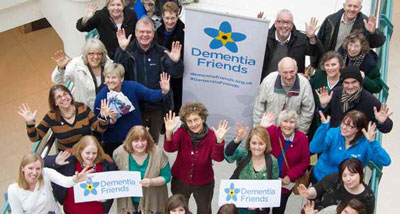
Courtesy Alzheimer’s Disease International. Used with permission.
The Dementia Friends program focuses on five key messages (Dementia Friends USA, 2022):
- Dementia is not a natural part of aging.
- Dementia is caused by diseases of the brain.
- It is not just about losing your memory.
- It's possible to live well with dementia.
- There is more to the person than the dementia.
7.3 Safety and Security
Safety is freedom from accidental or preventable injuries or harm. Security is the protection of people, organizations, and assets from harm or danger. However, changes to the physical environment intended to increase security may decrease a person’s autonomy and attempts to enhance autonomy can lead to decreased security. Providing autonomy without compromising security is a considerable challenge, particularly for clients living with dementia (Sandberg et al., 2021).
7.3.1 Elements of a Safe Environment
People living with dementia need to feel safe (and be safe). A safe and secure environment includes the absence of abuse, proper assistive equipment, dementia-trained caregivers, and consistent communication with caregivers and healthcare providers. Client safety also includes infection prevention, medication safety, and personal safety awareness.
Muscle weakness, injuries from falls, hearing loss, and visual changes increase the risk of accidents and injuries. Environmental safety focuses on reducing clutter, and removing hazards such as steps, poisonous plants, household chemicals, firearms, and alcohol.
Each room must be assessed for safety—especially bedrooms, bathrooms, and kitchens. Electrical outlets should be covered, and electrical appliances placed so they cannot encounter water. Monitoring devices can be installed in each room and medications must be safely stored out of reach of the client. Alarms or locks can be helpful to prevent wandering into unsafe places.
The table below illustrates some common safety issues, consequences, and suggestions that help make the environment safe and secure. Interventions should be tailored to match the specific circumstances.
Measures to Promote Safety and Security | ||
|---|---|---|
Safety issue |
Possible consequence |
Elements of a Safe Environment |
Wandering |
Getting lost, exposure to environmental hazards. |
Use technology such as the Alzheimer Association’s Comfort Zone.* Provide short, looping indoor corridors without dead ends. Create open, common areas of interest. Create safe, outdoor wandering areas that are accessible from indoor wandering paths. Paint the inner surfaces of doors so that they are not readily recognizable as an exit. Place locks where they are not visible. |
Cooking without supervision |
Fire, injury |
Install a shut-off valve on the stove. Remove burner on-off handles. Keep a working fire extinguisher. Create a work area with an activity kitchen. |
Falls |
Injury |
Rule out medical conditions. Create an uncluttered environment. Install handrails in showers and hallways. Wipe up spills promptly. Maintain physical activity. Supervise walking and use assistive devices. Remove throw rugs or tape edges down. Maintain good vision and hearing. Provide many places to sit. |
Poisoning |
Sickness or death |
Remove toxic plants from the environment. Lock up chemicals and medications. |
7.3.2 Elements of a Secure Environment
Security includes physical security measures such as exit control, lighting and surveillance, facility and room access, and control of the facility’s perimeter (fencing, gates). Security also involves staff training, emergency preparedness, and addressing resident abuse. Security measures must consider the privacy and autonomy of the resident.
For a person living with dementia who likes to wander, doors are often perceived as an attraction, inviting a person to go through. Facility exits need to be monitored or controlled to avoid a person exiting the facility (Gramegna, 2021).
Exit doors that are less visible and more camouflaged, with no obvious hardware, can reduce or even prevent a person from trying to open them. Increasing the visibility of “safe doors”—ones that encourage a resident to enter indoor safe areas of a facility—can distract them from exit doors. Alarmed exit doors should be discreet and should not disturb residents with loud sounds or strong lights. These precautions help a facility maintain a quiet atmosphere and support independence for residents (Gramegna, 2021).
7.3.2 Wandering and Safety
Although it is easy to identify the risks associated with wandering, it is often difficult to know how to allow a person to continue to wander safely. A regular review of medications ensures that wandering is not the result of medication side effects, overmedication, or drug interactions.
Despite the substantial clinical consequences of wandering, there is currently no standardized approach for assessing wandering behaviors. This has made it difficult to study the risk factors associated with wandering, its natural history and progression, and the effectiveness of interventions. Wandering behavior is typically detected by caregiver report, which may not be accurate, as it is based on the caregiver's ability to recognize and report this behavior (Kamil et al., 2021).
Address wandering by:
- Redirecting a person to a purposeful activity.
- Offering safe, looping wandering paths with interesting rest areas.
- Installing rails and grab bars.
- Providing regular exercise.
To prevent wandering into unauthorized or unsafe areas:
- Use a physical barrier (such as yellow tape).
- Put up visual barriers on exit doors such as “Stop” signs.
- Install alarms on entryways into unsafe areas or to the outside.
Engaging people in simple chores such as folding laundry or assisting with dinner can give them a sense of purpose and fulfillment. Electronic devices attached to the person’s ankle or wrist alert staff or family members when someone has wandered out of a designated area. Subjective barriers such as grid patterns on the floor in front of exit doors, camouflage, and concealment of doors and doorknobs have been shown to discourage a wanderer from exiting a building.
The Alzheimer’s Association has partnered with MedicAlert through the Alzheimer’s Association Safe Return Program to provide 24-hour assistance for those who wander. They maintain an emergency response line and immediately activate local chapters and local law enforcement to assist with the search for someone who has wandered off. The program includes an ID bracelet and a medical alert necklace. For more information call 800 625 3780 or visit the Alzheimer’s Association website (Alz.org).
7.3.3 Technology Related to Safety
Technology and electronic devices can reduce risk and increase independence. Safety technologies include GPS trackers to monitor wandering, smart home devices like sensors and automated lighting, medication reminders, and wearable devices for fall detection and emergency calls.
Smart plugs allow caregivers to remotely monitor and control electrical appliances, such as stoves, irons, heating and cooling devices. These tools provide peace of mind for caregivers while supporting the independence of the person living with dementia by allowing for remote monitoring, automated alerts, and streamlined daily tasks.
Smart safety sensors can detect smoke, carbon monoxide, flood, and fire and send early warnings and alerts to a caregiver’s phone. Indoor cameras allow caregivers to check on their loved one remotely and communicate with them via two-way audio.
7.4 Task-Centered vs. Person-Centered Care
Many of us trained in the traditional medical model are familiar with task-centered care. In this model, we provide care to the best of our ability but generally do not consider the places we work as “homelike.” Our approach is hierarchical, and we expect a facility to be designed to help us do our jobs.
Person-centered care turns this approach on its head by putting a client living with dementia at the center of our care and planning. When done right, task-centered care recedes into the background, replaced by care and activities that focus on the needs and well-being of adult day participants. Person-centered care is encouraged for people living with ADRD.
Person-centered dementia care is built on the understanding that a sense of belonging and opportunity for meaningful engagement are critical to the success of all human communities. Key principles for successfully implementing person-centered dementia care include:
- understanding the environment of the specific care setting for residents living with dementia
- creating a clear understanding of people living with dementia as unique individuals
- promoting access to meaningful engagement tailored to suit that person (Gramegna, 2021)
The person-centered approach was developed nearly three decades ago and is now considered the gold standard in dementia care. Five essential psychological needs are emphasized (Scher et al., 2025):
- Comfort—the feeling of trust that comes from others.
- Attachment—security and finding familiarity in unusual places.
- Inclusion—being involved in the lives of others.
- Meaningful occupation—being involved in the processes of normal life.
- Identity—what distinguishes a person from others and makes them unique.
Person-centered care can lead to positive outcomes for people living with dementia, including a reduced risk of behavioral problems, neuropsychiatric symptoms, and improved quality of life. Person-centered care can also have a positive impact on the caregivers, influencing staff behavior, job satisfaction of professional caregivers, as well as family satisfaction of informal caregivers (Wittmann et al., 2024).
7.5 Staff as Part of the Environment
Many people living with dementia are advocating for the phasing out all institutional care, the cessation of segregation in locked dementia units, and for all healthcare staff to be fully competent in dementia as well as disability.
Alzheimer’s Disease International, 2019
Much of the research on the effects of staffing has been done in nursing homes. Studies indicate that nurse staffing levels are a “critical factor” in determining nursing home quality of care. Nursing homes with higher staff-to-resident ratios provide better care (White and Olsho, 2023).
Many factors make it difficult to blend staff into the environment effectively. These can include high staff turnover, insufficient education, lack of resources, heavy workload, burnout, and difficult ethical issues. Training programs that enable formal and informal caregivers to acquire knowledge, empathy, and care skills are considered crucial for treating individuals with dementia adequately and effectively (Wittmann et al., 2024).
Consistent staffing, good pay, career advancement opportunities, and education significantly reduce staff turnover and support person-centered care. Small, fixed teams of trained caregivers and activities that are organized completely, or in large part, by clients and caregivers encourage cooperation and participation.
To encourage integration of the staff into a home-like environment:
- Hire staff with the emotional skill, training, and desire to interact with people with memory problems.
- Increase pay, training, and opportunities to advance.
- Eliminate institutional, centralized nursing stations.
- Locate nursing and work areas throughout the building.
- Allow staff to control lighting and environmental levels.
- Keep staff consistent.
Whether a caregiver is hired directly by a client or is a staff member in a facility, “being part of a resident’s or client’s environment” means being aware of the person’s routines and habits. It means respecting their needs, understanding the impact of cognitive and sensory changes (vision, hearing), and respecting cultural and language differences.
7.6 Staff Adjusting to Client Routines
Forget dementia, remember the person!
Alzheimer’s Disease International
When an adult day center is organized around dementia-friendly care, staff and caregivers adjust their routines to the routines of the client, rather than the other way around. This requires a fundamental shift in how medical professionals have been educated and trained.
In a home-like setting, the medical aspects are de-emphasized. Clients, staff, and family caregivers work as a consistent unit. Daily tasks, such as cooking and cleaning, can be shared and organized by clients, staff, and caregivers. Not surprisingly, this reduces staff turnover and provides more satisfaction for both staff and clients.
People living with dementia have certain rights that providers and caregivers should be aware of. They have the right to have their own clothes and other personal items. They must have unrestricted private communication, be able to send and receive unopened correspondence, and have access to a telephone.
Clients have the right to visit with any person of their choice, manage their own financial affairs, exercise of civil and religious liberties, and access appropriate healthcare. Facilities must be safe and clean, and clients must be free from chemical and physical restraints and free from abuse and neglect.
7.7 Schedules and Routines
For a person living with dementia, maintaining schedules and routines is important. A daily plan organized by the caregiver and the person they are caring for creates predictability and supports their well-being. A daily routine must be flexible, consider personal preferences, and include physical exercise and rest time.
Routine tasks such as bathing, dressing, and eating should be kept consistent each day. Keeping a to-do list with appointments, tasks, and events provides support and reminders for a person whose memory is impaired. Plan activities that the person enjoys and try to do them at the same time each day. Consider a system or reminders for helping those who must take medications regularly. Serve meals in a consistent, familiar place and give the person enough time to eat (Alzheimer’s.gov, 2026).
A schedule for someone living with dementia should be carefully planned, considering the person’s capabilities and preferences. A thoughtful schedule accounts for physical issues that might disrupt routines such as hunger, pain, fatigue, or illness.
Adult day facilities can be less institutional than nursing homes, allowing more personalized care. Even so, schedules and routines are often organized around the convenience of caregivers and can change dramatically from day to day. This is difficult for people living with dementia because they rely on a predictable routine to know what to expect. As a result, the person living with dementia experiences a lack of input and control.
Caregivers and healthcare workers responsible for maintaining a schedule need to be flexible while trying to maintain familiar routines. People living with dementia tend to be slow, so caregivers must allow ample time for meals and activities. Attempting to rush a person with dementia often causes aggressive behaviors that frustrate both parties.