
Challenging behaviors occur in the vast majority of people living with dementia. They are referred to as behavioral and psychological symptoms of dementia (BPSD) or neuropsychiatric symptoms of dementia (NSP). More than 90% of people living with dementia will eventually experience some type of challenging behavior associated with their dementia (Qi et al., 2026).
The loss of this ability to control and suppress challenging behaviors causes a lack of restraint, disregard for social convention, impulsiveness, poor safety awareness, and an inability to stop strong responses, desires, or emotions.
Although challenging behaviors are associated with brain changes, they are also caused by frustration, loss of control, discomfort, pain, and the inability to communicate needs. Challenging behaviors can also be triggered by frustrated family caregivers and poorly trained healthcare providers.
In general, successfully managing challenging behaviors means:
- Understanding what is causing the behavior.
- Creating a safe and comfortable physical environment.
- Learning how to divert the person’s focus to an object or activity.
- Encouraging regular physical activity.
2.1 Common Challenging Symptoms and Behaviors Associated with Each Stage
A symptom is a change in the body or the mind. Symptoms change as a person’s dementia progresses and can often cause behavioral changes. For some people symptoms worsen quickly. For others, changes progress more slowly.
We associate certain symptoms and behaviors with stages. The type of dementia, along with a person’s general physical and psychological health affects symptoms and behaviors as much as the stage of a person’s dementia.
2.1.1 Mild Dementia
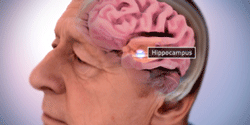
Location of the hippocampus. Source: Image courtesy of the National Institute on Aging/National Institutes of Health. Public domain.
In early, mild Alzheimer’s disease, plaques and tangles appear in the part of the brain called the hippocampus, which is responsible for memory and learning. This part of the brain helps a person form and store recent, short-term memories. It converts short-term memories into long-term memories by organizing and retrieving memories when needed.
Brain Changes in Mild Dementia
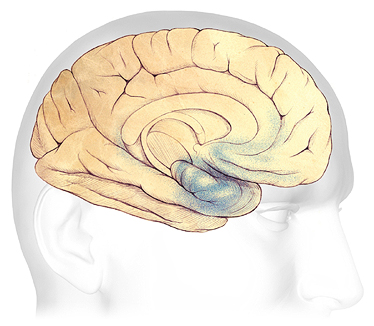
In early AD, sometimes before symptoms can be detected, plaques and tangles begin to form in and around the hippocampus (shaded in blue). Source: The Alzheimer’s Association. Used with permission.
The inability to recall something that just happened (short-term memory) is a common symptom in the early stage of Alzheimer’s disease and other types of dementia. A person can also have difficulty understanding where they are in relation to nearby objects (visual-spatial memory) and have trouble finding words (verbal memory). Logical thinking, language, and judgment are often mildly affected.
Even when symptoms are mild, a person’s behavior can begin to change, especially with Alzheimer’s disease and some other types of dementia. People often know something is wrong and may try to hide their mild confusion from friends, coworkers, and family. These changes can cause depression, stress, mood changes, and anxiety.
2.1.2 Moderate Dementia
As symptoms associated with dementia progress to the moderate stage, plaques and tangles spread forward to the areas of the brain involved with language, judgment, and learning. Many people are first diagnosed with Alzheimer’s or another type of dementia at this time.
In the moderate stage, work and social life becomes more difficult and confusion may increase. Damage affects the areas of the brain involved with:
- speaking and understanding speech
- logical thinking
- safety awareness
- judgment
- planning
- ethical thinking
At this stage, because of memory problems and confusion, for a person living with dementia, travel, work, and handling personal finances may become more difficult, if not impossible.
Brain Changes in Moderate Dementia
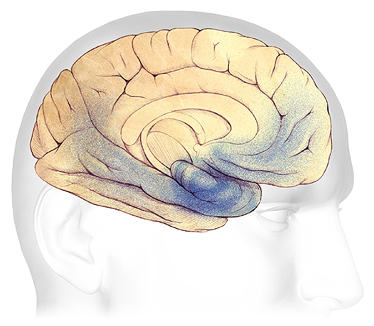
As symptoms progress from mild to moderate, plaques and tangles spread from the area of the hippocampus (dark blue) forward to the frontal lobes (shaded in light blue). Source: The Alzheimer’s Association. Used with permission.
Behavioral changes become more obvious to caregivers. Inappropriate behaviors such as cursing, kicking, hitting, and biting can occur. Some people repeat questions over and over, call out, or repeatedly demand your attention. Sleep problems, anxiety, agitation, and suspicion can develop.
A person with moderate dementia is usually still able to walk. This is because the part of the brain that controls movement is not affected. Wandering can become a safety issue. More direct monitoring is needed than during the early stage of dementia and a person may no longer be safe on their own.
2.1.3 Severe Dementia
In severe Alzheimer’s disease, because so many areas of the brain are affected, a person’s ability to communicate, recognize family members and loved ones, and care for themselves can be severely affected. A person living with severe dementia can be easily confused, indecisive, and often unable to clearly communicate their needs. Sleep disturbances, emotional outbursts, and frustration are very common.
Brain Changes in Severe Dementia
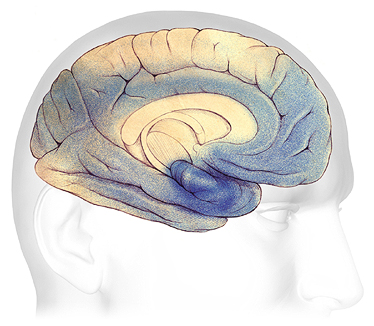
In advanced Alzheimer’s, plaques and tangles have spread throughout the brain (shaded in blue). Source: The Alzheimer’s Association. Used with permission.
All sorts of challenging behaviors can occur at this stage, especially if caregivers (including professional caregivers) are poorly trained, easily frustrated, or highly stressed. Bouts of paranoia can occur as well as delusions or hallucinations.
At this stage, a person living with severe dementia may wander, rummage, or hoard. Screaming, swearing, crying, shouting, loud demands for attention, negative remarks to others, and self-talk are common. These outbursts are usually triggered by unmet needs such as frustration, boredom, loneliness, depression, cold, heat, loud noises, or pain.
In the severe stage, a great deal of independence is lost, and around-the-clock care may be needed. Caregivers will likely need to oversee and directly assist with eating, bathing, walking, dressing, and other daily living activities.
2.1.4 Symptoms and Behaviors at the End of Life
At the end of life, many people living with dementia are completely dependent on caregivers. They often have trouble communicating their needs and desires using speech. They may become bedridden or nearly bedridden.
Often there are complications such as immobility, swallowing disorders, and malnutrition. Because people at this stage are much less active than in earlier stages of dementia there is an increased risk of developing acute conditions that can lead to illness or death. Pneumonia is a particular concern. It is the most common cause of death among older adults who have Alzheimer’s or other dementias.
At the end of life, it is likely that both short- and long-term memory are affected. Sensory changes such as loss of vision and hearing mean a person can be startled by loud noises and quick movements. Depending on the type of dementia, a person may experience agitation, psychosis,* delirium,** restlessness, and depression.
*Psychosis: loss of contact with reality.
**Delirium: a sudden, severe confusion that can be caused by infections, a reaction to medications, surgery, or illness.
For people living with severe dementia, hospice care may be needed. However, the rigidity of client admission criteria, particularly the requirement for a prognosis of 6 months or less, poses challenges for people living with dementia because prognosis can be imprecise due to the prolonged decline and sustained functional limitations related to the disease. Additionally, people living with dementia may enter hospice care after years of significant functional limitations and caregiving needs (Frank et al., 2025).
2.2 General Problem-Solving Approach to Challenging Behaviors
Problem solving is an important skill for caregivers and healthcare providers to develop. Practicing compassion, reassurance, and active listening can reduce or even prevent agitation and other challenging behaviors. It can also reduce the use of antipsychotics and other medications used to manage challenging behaviors.
The “ABC” model emphasizes data gathering and problem-solving. This approach helps staff and caregivers understand when and how often a particular behavior occurs. It is particularly effective when successful strategies are shared by staff, caregivers, and family members.
The ABC Approach considers:
A (Antecedent) What caused the behavior?
B (Behavior): What is the behavior?
C (Consequence): What are the consequences of a behavior?
The ABC approach also encourages caregivers and healthcare providers to examine their own behaviors and responses. Understanding your own biases, frustrations, and triggers helps you approach a person struggling with dementia with patience and compassion.
Callie Disrobes at a Birthday Party
Introduction: Older adults living with dementia often exhibit unexpected, challenging behaviors that may be difficult to understand and manage. In this example, we learn about Callie, a 96-year-old woman with moderate to severe dementia who receives hospice services in her home. Her daughter has scheduled a birthday party, and the house is filled with family and friends. Callie is sitting comfortably her recliner.
Client Information: Callie lives at home with 24-hour care provided by family members and paid caregivers. She can walk with assistance but usually prefers to sit quietly by herself in the living room, listening to music. Callie smiles a lot and likes talking to her daughters. However, on occasion she has a negative reaction to large crowds or noisy environments. Family members understand this and try to remove her from these stressors.
Antecedent: On a very warm day in August, with everyone’s attention focused on the celebration, no one notices that Callie had begun to remove her clothing. A caregiver turned just in time to see her take off her slacks and underpants.
Intervention: Her daughter had received dementia-specific training and knew that when something unexpected happens, the safety and dignity of her mother must come first. Rather than immediately trying to get Callie dressed, which might have caused a negative reaction, she simply asked everyone to leave the room for a few minutes. She sat next to Callie and quietly asked if she could help her get dressed. Callie responded with a definite “no” and pulled off the remainder of her clothing.
Another family member brought a sheet to cover Callie and stood by the door to maintain privacy. Callie’s daughter stayed with her mom and after a few minutes asked Callie if she needed anything. Callie’s response this time was that she was cold. Promising her some birthday cake if she would get dressed, the daughter was able to Callie get dressed. After Callie had moved to a quiet area (with a piece of cake), the party continued.
Discussion: Disinhibition, the loss of awareness of what is appropriate behavior, affects many individuals with dementia. If the family had gotten upset and embarrassed for her, Callie may well have reacted negatively. Temporarily removing the others from the room respected Callie’s dignity and gave her a few moments to experience physical discomfort without her clothes. Once the room quieted down, she accepted assistance and a “reward” for getting dressed again.
Family members discussed the incident after the party and agreed that they had forgotten to keep an eye on Callie as the birthday party got underway. They remembered that Callie is uncomfortable with noise and lots of activity but that overall, they did a good job diffusing the situation while taking Callie’s dignity and safety into account.
Client Perspective: Callie couldn’t explain why she took off her clothes, but it was clear that she felt no embarrassment when she did it. In fact, when asked about the incident, she claimed she didn’t remember a birthday party.
2.3 Strategies for Addressing Common Challenging Behaviors
Caring for a person experiencing cognitive and sensory changes due to dementia requires training, strategies, and techniques that change as a person’s dementia changes. Because dementia is progressive, strategies that work with mild dementia may not work in the later stage of a person’s dementia.
Each member of the team, including the person living with dementia plays a crucial role in establishing treatment goals. Maximizing a person’s function and independence, addressing challenging behaviors, and identifying and treating reversible causes of impairment is crucial.
Supportive care shifts the focus away from medications to a more comprehensive approach based on the notion of person-centered care. There is strong evidence to support the use of non-pharmacological interventions to improve cognitive functioning and reduce challenging behaviors in people living with dementia. Supportive care follows the client throughout the course of the disease by providing personalized care support to clients and families. It provides a full mixture of good quality medical care, person-centered, and psychosocial and spiritual care (Guzzon et al., 2023).
Although not a comprehensive list, certain behaviors are common in people living with dementia. This can include agitation, aggression, psychosis, wandering, rummaging, hoarding, sleep disturbances, and apathy.
2.3.1 Agitation and Aggression
Agitation, aggression, and psychosis are labels on behaviors that are often caused by environmental or personnel approaches rather than being due entirely to the person’s brain changes. These reactions should be viewed as an expressive communication of a possible unmet need.
Teepa Snow, STOP Treating Behaviors with Restraining Medications
Agitation and aggression are among the most common and challenging symptoms in older adults living with dementia. These behaviors worsen a client’s daily functioning, increase the chance of injury, and increase the likelihood of hospitalization and long-term care placement. They also impose a significant burden on caregivers and healthcare systems (Lichwala et al., 2026).
Agitated behaviors can include:
- Irritability
- Confusion
- Making loud demands
- Using obscene language
Aggressive behaviors can include:
- Hitting, punching, kicking, pushing.
- Throwing objects or using objects to hit or lash out.
- Engaging in inappropriate sexual advances or touching.
Not surprisingly, agitated and aggressive behaviors often occur during personal care tasks involving close contact. A person may feel threatened or feel their personal space is being violated. Depending on the type and severity of a person’s cognitive changes, agitated and aggressive behaviors may become more pronounced as a dementia progresses.
Caregiver training is essential. Psychosocial and environmental interventions, and recognition of personal habits and patterns can reduce or even eliminate agitated or aggressive behaviors. Appropriate touch*, music therapy, massage, craniosacral therapy**, acupressure, and tactile massage have been used to treat aggression. Individual behavioral therapy and individualized, person-centered care based on psychosocial management is recommended (Burns et al., 2012, latest available).
*Appropriate touch: when using touch as a strategy, consider permission, religious, ethnic, and personal preferences as well as professional and ethical standards.
**Craniosacral therapy: a hands-on technique that uses soft touch to release restrictions in the soft tissue surrounding the central nervous system.
Try these tips to help manage agitation and aggression:
- Speak calmly and actively listen.
- Reassure the person that they are safe.
- Try to distract by offering an activity or chore.
- Reduce noise and clutter.
- Consider physical and medical causes.
As a person nears the end of their life, they may experience what is sometimes referred to as terminal restlessness, terminal agitation, or end-of-life delirium. This is characterized by distress, anxiety, confusion, restlessness, hallucinations, fluctuating consciousness, and moaning or yelling.
Because of the short life expectancy, the focus of care is to relieve delirium symptoms, find a balance between communication and the need for sedation, and provide support for caregivers. Once the diagnosis of end-of-life delirium is made, it is important to educate caregivers on its irreversible nature, its symptoms, and the process of dying. Emotional support and discussions about the goals of care are essential (Hui et al., 2024).
2.3.2 Dementia-Related Psychosis
Dementia-related psychosis occurs when a person experiences symptoms such as delusions, paranoia, or hallucinations. A delusion is a false belief or a misinterpretation of a situation. For example, a person living with dementia might accuse someone of stealing something that has simply been misplaced or might confuse a caregiver with someone from their work past.
Paranoia is a type of delusion in which a person may believe—without a good reason—that others are lying to them, being unfair, or are “out to get me.” A person may become suspicious, fearful, or jealous of other people. Paranoia can sometimes include caregivers, family, or friends.
Hallucinations can occur when a person hears, tastes, smells, sees, touches, or feels something that is distorted or not there. For example, they may see shadows, a person walking through the bedroom, or people or animals outside the window.
Visual hallucinations can occur in the moderate to severe stage of dementia and are particularly common in people living with Lewy body dementia*. While atypical antipsychotics are sometimes used off-label to manage hallucinations, in a person with Lewy body dementia, antipsychotic medications can make hallucinations worse.
*Lewy body dementia: a type of dementia in which a person experiences cognitive decline, “fluctuations” in alertness and attention, visual hallucinations, and slowness of movement, difficulty walking, or rigidity (stiffness).
For a person with new onset of visual hallucinations, the number one cause is medication side effects. For this reason, all medications the person is receiving should be regularly and carefully reviewed.
Acute health issues such as urinary tract infections or environmental factors such as poor lighting or sensory overload can cause delusions and hallucinations. Changes in the brain can contribute to these behaviors, especially changes related to sensory awareness, memory, and decreased ability to communicate or be understood.
The first step in the management of delusions and hallucinations is to rule out delirium or another acute medical cause. Observing a person’s behavior and listening to what they have to say often helps a caregiver address the root cause of the delusion or hallucination.
When communicating with someone who is expressing paranoia or delusions, understand that the delusion is very real for that person. Do not argue or try to correct the person. Explaining the truth of the situation does not work. Do not agree or validate the paranoia or delusion—try to respond to the person’s emotion. For hallucinations, it is often helpful to decrease auditory and visual stimuli as well as evaluating the person for a visual or hearing impairment.
2.3.3 Wandering
Wandering and exploring are activities that almost everyone enjoys. But, because a person living with dementia might be at risk for falls or injury, providers and caregivers often see wandering as a problem and try to control or prevent this behavior. However, preventing a person from safely wandering creates other problems, such as boredom, loss of social interaction, stigma, loss of conditioning, pain and discomfort, and even skin breakdown.
Wandering involves moving to a specific location, lapping, or circling along a path, pacing back and forth, or wandering at random. People may wander out of habit or because they are convinced something needs to be done. They may want to return home after work, cook dinner, walk the dog, exercise, or search for something they think they have misplaced. The most important goal is to prevent a person from wandering into unsafe areas, or eloping* from a home or facility.
*Eloping: When a person wanders away or leaves a facility or home unsupervised or unnoticed.
Wandering is a common problem seen in people living with almost all types of dementia. Nearly 60% of people living with dementia will wander during the course of their disease. Wandering can happen at home or in the community. In institutional settings, wandering occurs in about 40% of clients (Anu et al., 2024).
A person who was socially and physically active throughout their life, who enjoys music, or who deals with stress by engaging in physical activities is more likely to wander than others. The habits of a lifetime and the desire to be socially active remain intact.
Wandering can be a beneficial activity if there are safe places to wander, in and around a facility or home. Management of wandering should include a regular review of medications to make sure wandering is not the result of medication side effects, overmedicating, or drug interactions.
The most important goal is to prevent a person from wandering into unsafe areas or away from the home or facility by providing safe, looping wandering paths with interesting rest areas, and redirecting to a purposeful activity. Using subjective barriers such as grid patterns on the floor in front of exit doors, camouflage, and concealment of doors and doorknobs may discourage a wanderer from exiting a building.
Additional strategies to manage wandering include:
- Provide regular, meaningful exercise.
- Offer simple chores such as folding laundry or assisting with dinner.
- Reduce excessive noise.
- Attach an electronic device to the person’s ankle or wrist that alerts staff or family when someone has wandered out of a designated area.
- Install quiet alarms on entryways into unsafe areas or to the outside.
- Use physical barriers such as yellow tape or stop signs to prevent wandering into unsupervised areas.
Did you Know. . .
Florida maintains a Silver Alert program for cognitively impaired older adults who become lost while driving or walking. If a client wanders away from their home or care facility, call 911 immediately. The Silver Alert program is activated by law enforcement, which broadcasts information to the public so they can assist in the rescue of the endangered person. For more information, contact the Silver Alert information line, local law enforcement, or the Florida Department of Law Enforcement either online or by phone at 888 356 4774.
2.3.4 Rummaging and Hoarding
Rummaging and hoarding are behaviors in which a person gathers, hides, or puts away items in a secretive and guarded manner. Rummaging and hoarding are not necessarily dangerous or unsafe, but these behaviors can be frustrating for caregivers.
Hoarding is associated with insecurity, fear, and anger and may be an attempt to hold onto possessions and memories from the past. A person might hoard because they fear losing money or possessions. They may feel a lack of control or a need to “save for a rainy day”.
Memory loss, poor judgment, and confusion contribute to rummaging and hoarding. Rummaging through familiar items can create a sense of safety and security. Confusion can lead to rummaging through another person’s belongings, which can be particularly frustrating for other people.
To address rummaging and hoarding behaviors, try to determine what triggers the behavior and look at the consequences, if any. The reason for rummaging and hoarding may not be clear to you but there may be a perfectly good reason why someone living with dementia is rummaging.
The rummaging impulse can be satisfied by creating a rummaging room or a bag or drawer of items that the person can pick through. Rummaging through another person’s belongings can be prevented by installing locks on drawers and closets. Restricting all rummaging and hoarding can be frustrating for a person who enjoys these activities.
To safeguard important items, place them out of reach or in a locked cabinet. Consider having mail delivered to a post office box and check wastepaper baskets before disposing of trash. Look for patterns and carefully observe the person’s hiding places.
Reduce clutter and label cabinets, doors, and closets (with words or pictures). Poisonous items should be stored away from common areas in locked cabinets.
Rummaging and hoarding are obsessive/compulsive behaviors. A person who feels a strong need to rummage or hoard can be remarkably persistent, secretive, and client making it difficult for caregivers to address these behaviors.
2.3.5 Sleep Disturbances
Many people living with dementia experience some sort of sleep disturbance due to comorbid medical conditions and environmental factors. Common sleep problems include insomnia, fragmented sleep, obstructive sleep apnea*, rapid eye movement sleep behavior disorder**, and restless legs syndrome. Individuals may have trouble falling asleep or staying asleep due to altered circadian rhythms*** and increased confusion during the night. (Mukherjee et al., 2024).
*Obstructive sleep apnea: a syndrome caused primarily by the collapse of the upper airway during sleep.
**Rapid eye movement sleep behavior disorder: a sleep disorder in which individuals physically and/or vocally act out vivid, often unpleasant dreams and sudden, involuntary arm and leg movements during REM sleep.
***Circadian rhythms: disruption in the body’s sleep-wake cycle.
Comorbid medical conditions that can affect sleep in older adults living with dementia include:
- cardiovascular disease
- diabetes
- depression and anxiety
- thyroid disorders (hypothyroid and hyperthyroid)
- untreated or poorly treated pain
The Center for Medicaid and Medicare Services (CMS) now requires non-pharmacologic interventions for sleep disturbances be tried and documented before using sedatives or psychotropic medications in a person living with dementia (CMS, 2024).
Non-pharmacological treatments can include (Mukherjee et al., 2024; CMS, 2024):
- Cognitive-behavioral therapy for insomnia.
- Minimizing environmental disruptions (reducing nighttime noise and excessive light).
- Avoiding stimulating activities close to bedtime.
- Encouraging good sleep hygiene (a regular bedtime routine and a warm comfortable sleeping environment).
- Restricting caffeine, nicotine, and alcohol.
In addition to affecting the health and quality of life of the person living with dementia and their caregivers, sleep disturbances can contribute to challenging behaviors. CMS requires that sleep disturbances be evaluated when a person exhibits agitation, anxiety, wandering, or changes in cognition. This includes looking for potentially treatable causes such as pain and discomfort, hunger and thirst, the need to urinate, infections, and adverse drug reactions.
Sleep disturbances can lead to “sundown syndrome”, a set of symptoms or behaviors that emerge in the late afternoon or early evening. Managing sundown syndrome involves a combination of environmental, behavioral, and medical interventions. A consistent daily routine, regular physical activity, soothing and familiar activities in the late afternoon, and a calm and a comfortable environment can improve sleep and decrease sundowning (Mukherjee et al., 2024).
Benzodiazepines, which have a hypnotic, sedative effect are currently the most widely prescribed medications for sleep disorders in older adults. Despite their widespread use, concerns remain regarding their potential for tolerance, dependence, and adverse effects such as cognitive impairment (especially in older adults) (Chavez-Mendoza, 2025).
Benzodiazepine dependence has been associated with severe depression and anxiety and impaired cognitive and psychosocial function. In older adults, increased sensitivity to benzodiazepines can increase the risk of confusion, disorientation, and falls. These adverse effects increase the complexity of treating clients living with dementia (Chavez-Mendoza, 2025).
Recently, non-benzodiazepine hypnotics, commonly known as Z-drugs, have been suggested as effective alternatives due to their similar mechanism of action. They may improve sleep quality, lower dependency risks, and reduce adverse effects compared to benzodiazepines (Chavez-Mendoza, 2025).
2.3.6 Apathy
Apathy is a lack of interest or emotion, loss of motivation, indifference, and a blunting of emotions. It affects 50–70% of people living with dementia (Baber et al., 2021).
Apathy in people living with Alzheimer’s disease is associated with increased functional impairment, a greater likelihood of rapid functional decline, and a lower self-reported quality of life. It is also associated with poorer performance in activities of daily living, more rapid disease progression, and increased mortality in people with Alzheimer’s disease (Dolphin et al., 2023).
Apathy is often under-recognized, under-diagnosed, and poorly managed. Caregivers often find it frustrating when it appears that a person living with dementia is capable of doing a task but simply does not bother or will only do so with strong encouragement (Baber et al., 2021).
For healthcare providers and especially for family caregivers, keeping a person engaged in activities can break through the apathy. The efforts of caregivers to reignite this “spark” in the person they are caring for enables people living with dementia to overcome apathy through constant stimulation and encouragement (Chang et al., 2021).
Viewing apathy as simply the result of neurological changes limits successful interventions. Considering apathy as a result of environmental and social factors provides caregivers with the motivation to intervene and make a difference in the life of the person they are caring for (Chang et al., 2021).
2.4 Physical and Chemical Restraints
When—if ever in the eternal dementia care merry-go-round of staff shortages, budget limitations, regulatory approvals, mandates, or penalties—will we focus on the people we are supposed to be serving without turning first to medications.
Teepa Snow, STOP Treating Behaviors with Restraining Medications
The Omnibus Budget Reconciliation Act of 1987 (OBRA 87) established a resident’s right to be free of physical or chemical restraints in nursing homes when used for the purpose of discipline or convenience and when not required to treat the resident’s medical symptoms. Uncooperativeness, restlessness, wandering, or unsociability are not sufficient reasons to justify the use of a restraint (GovTrack, 2020).
Use of restraints should be (GovTrack, 2020):
- Reserved for documented indications.
- Time limited.
- Frequently re-evaluated for their indications, effectiveness, and side effects.
In most states the use of physical and chemical restraints on nursing home clients is illegal. In Florida, the Nursing Home Bill of Rights states that a nursing home resident has
. . . the right to be free from mental and physical abuse, corporal punishment, extended involuntary seclusion, and from physical and chemical restraints, except those restraints authorized in writing by a physician for a specified and limited period of time or as are necessitated by an emergency. In case of an emergency, a restraint may be applied only by a qualified licensed nurse who shall set forth in writing the circumstances requiring the use of restraint, and, in the case of use of a chemical restraint, a physician shall be consulted immediately thereafter. Restraints may not be used in lieu of staff supervision or merely for staff convenience, for punishment, or for reasons other than resident protection or safety (Florida Statutes, 2025).
2.4.1 Physical Restraints
Decades ago, there was a common misconception that restraints improve the safety of frail elders. The truth, however, is that restraints are dangerous and often cause harm to nursing home residents. Many studies document the dangers and recommend more humane methods to improve the safety of nursing home residents.
CANHR, 2025
A physical restraint is any manual method, physical or mechanical device, material, or equipment attached to or adjacent to a person’s body that the individual cannot remove easily and which restricts freedom of movement or normal access to one’s body.
Physical restraints can include:
- belts
- mittens
- soft wrist and ankle restraints
- vest and jacket restraints
- bedrails
- geriatric chairs and recliners
- wheelchair safety bars
- lapboards
Restraints use is common yet often applied without understanding their risks. Bed rails can prevent falls but also the risk like entrapment, especially for cognitively impaired older clients. Restraint belts secure a person to a chair or bed but can cause discomfort, confusion, helplessness, agitation, and anxiety. Restraint belts can also lead to severe complications such as pressure ulcers or impaired circulation if not monitored correctly. Fixed seating devices provide support but can restrict mobility and independence (Tao et al., 2025).
Restraints affect a person’s sense of well-being, causing feelings of low self-worth, depression, withdrawal, humiliation, and anger.
Restraints are not limited only to physical devices. Restraint can include using (or threatening) force or restricting a person’s movements—even if they do not resist. Forced isolation (such as locking a person in their bedroom) is also a type of restraint.
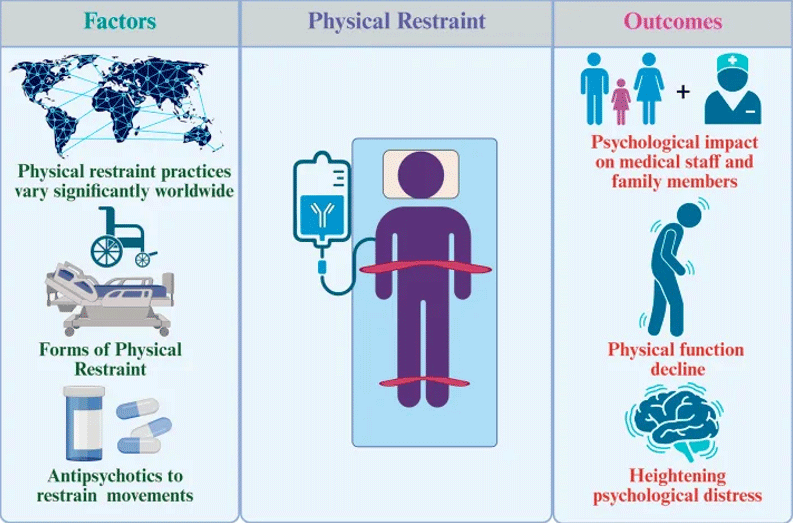
Source: Tao, et al. Creative Commons Attribution License (CC BY).
2.4.2 Chemical Restraints
The term “chemical restraint” refers to the use of antipsychotic, antianxiety, antidepressant, or sedative medications for the purpose of controlling or restricting a person’s behavior or movement. Unfortunately, a decrease in the use of physical restraints has been linked to the increased use of chemical restraints (Cain et al., 2023).
In 2023, the American Geriatrics Society Beers Criteria® for Potentially Inappropriate Medication Use in Older Adults stressed the need to avoid antipsychotics and other medications for behavioral problems of dementia and delirium because their use is frequently associated with harm (AGS, 2023).
Between 2011 and 2019, psychotropic drugs* were prescribed to about 80% of nursing home residents. Higher use of psychotropic drugs was associated with nursing homes with lower ratios of registered nurse staff to residents. Nursing homes with a higher percentage of low-income residents were also associated with higher use of these drugs (OIS, 2022).
*Psychotropic drugs: antipsychotics, anticonvulsants, mood stabilizers, and central nervous system agents.
Behavioral interventions are the preferred management strategy for treatment of challenging behaviors associated with dementia. The decision to use or not use a chemical restraint should always be made in collaboration with the client and family members (AGS, 2023).
A provider may choose to prescribe an antipsychotic medication when symptoms are severe, dangerous, or cause significant distress to the client. These medications may be effective in some cases. However, the provider must disclose to the client and family that the medication is being used off-label* meaning a drug has not been approved by the Food and Drug Administration (FDA) for treatment of behavioral symptoms of dementia. The provider must obtain permission from the client or family member to use these drugs for behavioral symptoms of dementia.
*Off-label: prescribing medications for an unapproved indication, age group, dose, or form of administration.
2.4.3 Alternatives to Restraints
There are many alternatives to the use of physical and chemical restraints. Some alternatives practices enhance safety and comfort for all clients, such as increasing staffing levels, removing hazards, providing safe areas for walking, and training staff on how to identify and respond to unmet needs (CANHR, 2025).
Other alternatives include adapting and tailoring chairs to improve comfort and safety, using pads and pillows to support comfortable and safe body positions, providing therapy and restorative care to improve a resident’s abilities to move safely, adjusting care and caregiver assignments to a resident’s preferences, and using low beds and floor padding to safeguard against harmful falls from bed (CANHR, 2025).
Establishing a routine, including a toileting schedule, improves comfort and reduces challenging behaviors. Regular exercise, a comfortable place to rest, and establishing a schedule for napping also help. On a regular basis:
- Address hunger, thirst, and discomfort.
- Review medications for adverse effects.
- Treat all underlying causes, including pain.
- Assess hearing and vision.
- Relieve impaction.
All areas, both in the home and in a facility, should be free of equipment and obstacles. Providing wall rails, grab bars, and transfer poles in rooms, bathrooms, hallways, and common areas promotes independence reduces caregiver stress and worry.

Transfer poles and grab bars support independence and safety. Source: Author.