
2. Communicating with Clients with AD and Related Disorders
My dad gets pretty confused—especially in the early morning and late afternoon. He struggles for words—often trying to explain something by saying “You know, that thing ” and then gets frustrated because I don’t understand. When I read the newspaper to him, all the articles get jumbled up in his head and he doesn’t know when one article ends and another starts. So, I just read short articles, Miss Manners, that sort of thing. I tell him, “That’s the end of the article about the election—this is a new article about the weather up north.”
Caregiver, West Palm Beach, Florida
2.1 How Dementia Affects Communication
Dementia affects communication in many ways. People living with dementia have to work hard to say what they want to say. Depending on how severe the dementia is, they might not remember what was said a few moments ago. They often have trouble carrying on a conversation and doing something else at the same time. Background noise is often confusing and irritating.
Communication challenges associated with dementia include reduced comprehension, reduced verbal expression, and memory problems. Cultural and language diversity adds complexity, necessitating culturally competent communication and care (Sunjaya et al., 2025).
With advancing dementia, communication difficulties can arise due to cognitive and linguistic decline, leading to potential challenges in being understood. Different challenges may be experienced depending on dementia subtype and progression. For example, difficulties in word-finding and verbal expression can lead to frustration and distress due to the inability to express thoughts and feelings (Collins et al., 2022).
Communication challenges for a person living with dementia include difficulty expressing thoughts and understanding what another person is trying to communicate. It is estimated that aphasia* is associated with 25% of all frontotemporal dementia. Most people living with dementia also demonstrate anomia** and other language deficits (Dhanda and Scaria, 2025).
* Aphasia : a neurological language disorder caused by brain damage that impairs speaking, comprehension, reading, and writing, though intelligence remains intact.
** Anomia : the inability to remember and retrieve words on demand.
Hearing loss is relatively common modifiable risk factor, affecting about 8% of people living with dementia. These communication impairments not only impact a person’s ability to convey their needs and preferences but also contribute to frustration, social isolation, and diminished quality of life. Unmanaged hearing impairment in people living with dementia can lead to or sustain feelings of social isolation (Dhanda and Scaria, 2025).
Communication difficulties can increase the risk of individual needs not being met and so may also directly impact quality of life. Limited communication may increase depression, anxiety, and loneliness and contribute to physical and cognitive decline (Collins et al., 2022).
When a person expresses feelings of frustration and displays behaviors arising from unmet needs, others may perceive these as challenging behaviors. Although verbal expression may be more limited, nonverbal communication can convey feelings, emotions, and preferences. Nonverbal communication is often preserved in people with moderate-to-severe dementia, as is the desire and ability to communicate opinions and answer questions (Collins et al., 2022).
2.1.1 General Conversations
My mom has dementia but still listens intently to our conversations. She followed the 2024 election with a great deal of interest even though, when asked, she couldn’t remember the names of the presidential candidates. When the doctor asked her “Are you are Democrat or a Republican?” she responded immediately and fiercely “I’m a Democrat!”
Family Caregiver, Pensacola, Florida
Think about the last conversation you had with a friend or family member. You said what you wanted to say. You remembered what was said and understood the conversation. You probably had the conversation while doing something else—fixing breakfast or getting ready for work. You have no trouble talking even if there is a lot of noise in the background.
General conversations are social, friendly, and informal. They are not usually related to a specific task or goal. General conversations are a way to greet people and find out how they are doing. General conversations usually begin with a greeting or a comment, suggestion, or explanation.
A general conversation with a person living with dementia is no different than a conversation you would have with a friend or coworker. You can connect with people by learning about what they liked when they were younger: What music was popular? Who was president? What major events happened in their younger years? Did they serve in the military? How many children do they have? Where did they work? Where did they travel? What were their interests and hobbies?
A person living with dementia may not remember what you talked about yesterday, but they still want to hear what you have to say, even if you are repeating something said earlier.
Avoid talking down to older adults, something that is common in hospital and care home settings. This includes using childish or pet phrases such as “Are your feetsies cold?”; diminutives such as “pumpkin,” “young lady,” “cutie pie”; collective pronouns such as “How are we feeling today”; and belittling language such as “Let’s get your leash on you.” This type of verbal language is counterproductive and can increase resistance to care. Despite this, some caregivers and healthcare providers believe that people living with dementia appreciate these phrases (Sunjaya et al., 2025).
2.1.2 Conversations Related to a Task or Goal
When trying to complete a specific task, communication must be clear and direct. Conversations about a specific task are more successful when you use closed questions. A closed question shows your interest and invites a person to respond. For example, “Are you hungry?” or “Are you ready to get dressed?” keeps focus on the task at hand.
Task-related conversations involve gentle persuasion and positive feedback. Speak in a slow, clear voice, be respectful and relaxed, and explain the goal of the task. The person you are caring for may not share your goal or agree with what you are asking. More likely, they may not understand what you want. The following story about Randy and Ann shows this. Think about what you would do in this situation.
2.2 Strategies and Guidelines for Verbal Communication
Verbal communication is communication with words . It is an important part of daily life, creating positive relationships, and letting us know that someone cares. It allows us to express our feelings and gives caregivers an opportunity to assess the well-being of the person they are caring for.
A successful conversation with a person who is living with dementia begins with eye contact (if it is OK in that person’s world) and an introduction. Starting with something light and conversational, such as the weather or what’s happening in the news, puts us at ease. Nonverbal gestures such as head nods, a light, appropriate touch * on the arm, and a warm expression create trust.
* Appropriate touch : refers to professional and ethical behavior while considering the individual’s religious, cultural, and personal preferences.
Certain verbal communication techniques can enhance person-centered care. This can include greetings, rephrasing, using yes/no and open-ended questions and affirmations. Addressing a person by name and using greetings helps establish a connection and foster respect. Providing short, clear instructions and breaking down tasks into manageable steps supports comprehension and reduces anxiety and resistance (Sunjaya et al., 2025).
Successful communication also involves avoiding contradictions and using techniques like saying “I didn’t realize that” to handle disagreements without escalating stress, followed by a statement that confirms the person’s view. Repeating or rephrasing a statement without correcting a person can keep communication smooth and nonconfrontational. For instance, instead of correcting someone who says, “There’s a dog outside my window trying to get in”, a response like “There’s a dog outside your window trying to get in?” maintains conversation and avoids disorientation (Sunjaya et al., 2025).
Using conversational cues encourages meaningful engagement. For example, “The weather has been really interesting lately, hasn’t it?” Concluding a conversation or task is also important and helps prevent confusion. This involves making specific arrangements for what will happen next and announcing task completion, such as, “I’ll see you tomorrow… That’s all done, now” (Sunjaya et al., 2025).
Practice these communication techniques:
-
Approach from the front and make eye contact.
-
Greet the person by name, then introduce yourself.
-
Kneel down to the person’s right side and offer your upturned hand.
-
Use short, 1- or 2-step questions and await a reply.
Be attentive and sympathetic and continue the conversation by asking a follow-up question. Take a deep breath, relax, and take a moment to look at the person. Check your body language—if you remain standing, you may appear aggressive or threatening.
Keep in mind the level of the person’s dementia. Is there a hearing loss? Are there underlying conditions that affect mobility or cause pain? Are you having a social conversation or do you have a specific goal in mind?
2.3 Strategies and Guidelines for Nonverbal Communication
Nonverbal communication is communication without words . Facial expressions, eye movements, hand gestures, body language, and movements of the arms and legs are examples of nonverbal communication. Tone of voice and how well you pay attention are nonverbal skills that matter just as much as words.
Paying attention to tone, intonation, and speech rate—ensures communication is attuned to a person’s emotional and cognitive needs. Showing empathy by mirroring the person’s body language can deepen the connection. Gestures like pointing or demonstrating actions help direct a person’s focus to specific tasks or objects, while tactile prompts, such as handing an object or guided touch,* capture attention and aid understanding (Sunjaya et al., 2025).
* Guided touch : a technique that allows a caregiver to assist a person with tasks such as eating and grooming by placing their hand under a person’s hand and providing tactile cues and gentle assistance.
Communication and emotions are related. Damage to the part of the brain that affects memory also affects emotions . It can affect a person’s ability to read and follow nonverbal facial cues. This can affect their ability to understand when another person is frustrated, angry, or even happy.
How you dress, your posture, how you approach a person, and how close you get to a person are also examples of nonverbal communication. Even silence is a form of nonverbal communication.
Appropriate touch is a powerful form of nonverbal communication. Touch can be friendly, frightening, soothing, dominant, or supportive. Touch has different meanings depending upon your culture, gender, age, and situation.
The way you speak carries nonverbal information. Your tone reveals calmness or impatience, affection or disapproval, confidence or fear. The loudness of your voice and its tone and rhythm communicate additional information. If you are hurried, frustrated, or angry, a person will pick up on your mood and body language more quickly than your verbal communication.
How the environment (surroundings) look is a powerful form of nonverbal communication. A clean, nicely decorated room with good lighting is supportive. It encourages people to interact. A drab room with harsh lighting and little decoration has the opposite effect—it shows a lack of support and respect. Studies have shown that individuals say they don’t like people when they see them in unattractive rooms.
Nonverbal communication using hand gestures and unhurried movement reinforces your words. If the person does not answer right away, be patient and wait a bit. It’s OK to be silent, which is calming and reassuring—especially in social conversations.
People in the late stage of dementia may become unresponsive . This means they do not respond to what is happening around them. It means that they can no longer communicate their wishes. It does not mean they don’t feel or understand, at least on some level, what is happening around them.
Communicating with a person who is unresponsive can be difficult for family members and caregivers because it is hard to know what the person is thinking or feeling. Fortunately, many of the techniques that work in the earlier stages of dementia are useful in this stage as well.
People may be able to hear, and possibly understand, even if they don’t respond. Use gestures and facial expressions to support what you’re trying to say. Give the person time to understand why you are there. Use a calm, slow manner and a respectful attitude.
You can communicate concern and caring for a person in bed or chair by providing pillows for neck, arm, and leg support; a warm blanket; and gentle repositioning. Mild range-of-motion exercises approved by a physical or occupational therapist, gentle appropriate touch, and massage are reassuring.
Keep the surroundings peaceful and avoid loud or sudden noises; the person has no way to tell you when a sound is annoying. Reduce discomfort and confusion by keeping the area around the bed or chair free of clutter.
When working with a person who is unresponsive, slow your own movements and re-introduce yourself at each encounter. Communicate using short, simple sentences. In addition:
-
Approach on the person’s right side in a calm and relaxed manner.
-
Address the person by a preferred name or title.
-
Use hand gestures and light, appropriate touch to communicate your intentions.
-
Avoid a condescending tone (talking down).
2.4 Assessing Pain in a Person with Cognitive Impairment
The assessment of pain in people living with dementia is a significant challenge. These clients tend to voice fewer pain complaints but may become agitated or exhibit unusual or sudden changes in behavior when they are in pain. Caregivers may have difficulty knowing when these clients are in pain and when they are experiencing pain relief. This makes people living with dementia vulnerable to both under-treatment and over-treatment.
Behavioral pain indicators can help with pain assessment in a person who is unable to describe or communicate their feelings of pain. The most sensitive indicators of pain in non-communicative older adults with dementia are facial expressions, vocalizations, body movements, changes in interactions with other people, difficulty with activities of daily living, and changes in mental status (Tagliafico et al., 2024).
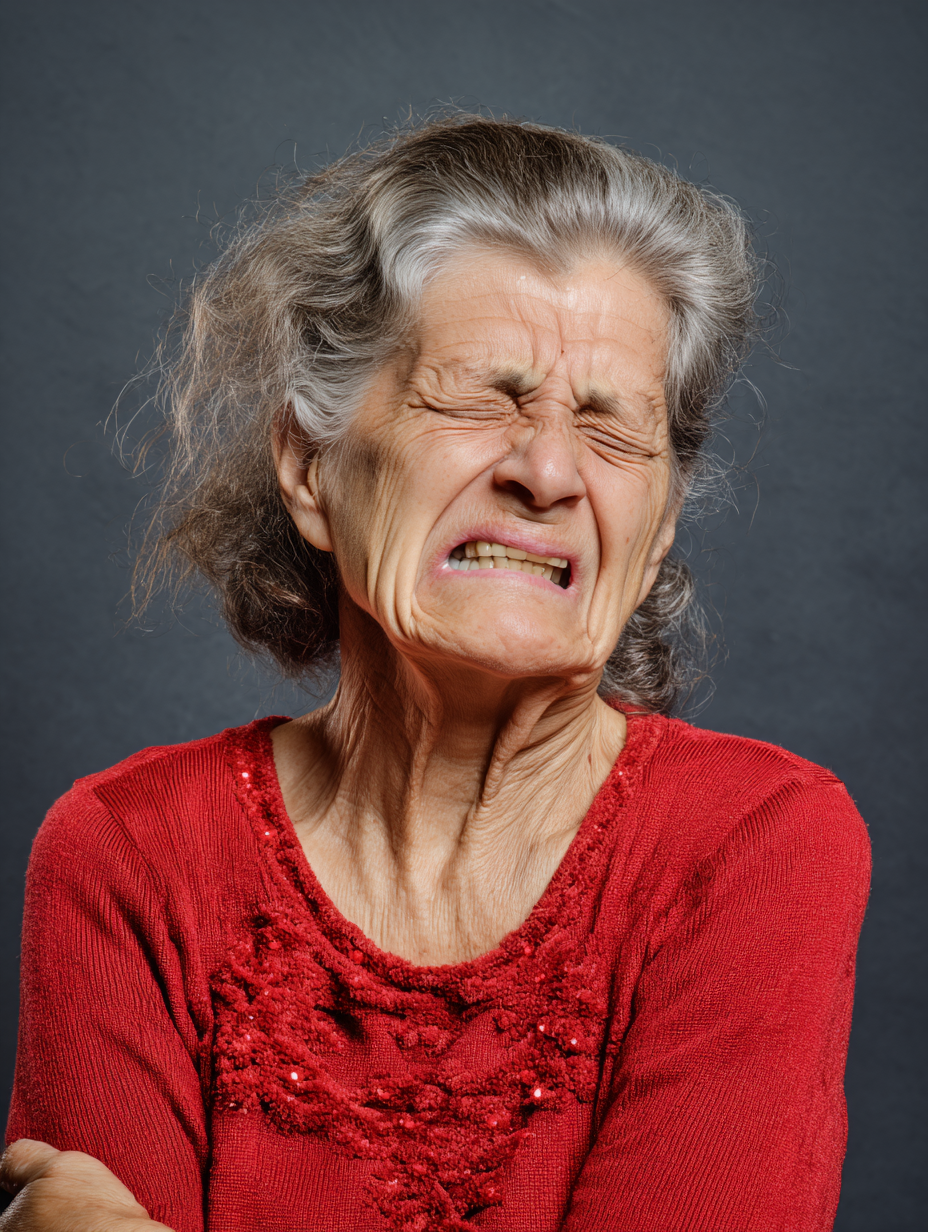
A woman grimacing in pain. Created by author using Midjourney AI.
Uncertainty about identifying pain in a person living with dementia is a significant barrier to prompt pain management. For healthcare providers who use pain self-report tools to interpret the nonverbal indicators of pain, they may attribute these behaviors to dementia rather than pain (Tagliafico et al., 2024).
Orofacial * pain is a common type of pain older clients living with dementia, affecting nearly half of institutionalized older adults. Impaired oral health care may be the result of cognitive dysfunction, motor apraxia, neglect, or resistance to care (Tagliafico et al., 2024).
Orofacial : relating to the mouth and face.
Pain scales are tools that can be used to assess pain in a person living with dementia. Some of the most commonly used tools are (Tagliafico et al., 2024):
-
PAINAD: the Pain Assessment in Advanced Dementia—assesses breathing, negative vocalization, facial expression, body language, and consolability.
-
PACSLAC: Pain Assessment Checklist for Seniors with Severe Dementia—assesses facial expressions, body movements, social interaction and mood, and physiological circadian rhythms.
-
NOPPAIN: Non-Communicative Patient’s Pain Assessment—assesses activity, pain behavior presence, pain behavior intensity, and pain intensity.
-
Abbey Pain Scale—assesses vocalization, facial expressions, change in body language, behavioral changes, and physiological and physical change.